The most expensive-looking thing in the first Creed costs nothing at all: the camera simply refuses to look away. Early in the film, Adonis Johnson climbs into a Philadelphia ring for his first professional bout, and Ryan Coogler lets a single unbroken shot follow him through two and a half rounds. There is no cutaway to the crowd, no reaction shot from the corner, no merciful edit when a punch lands. The picture asks you to stay in the room, and for the length of the fight you do.
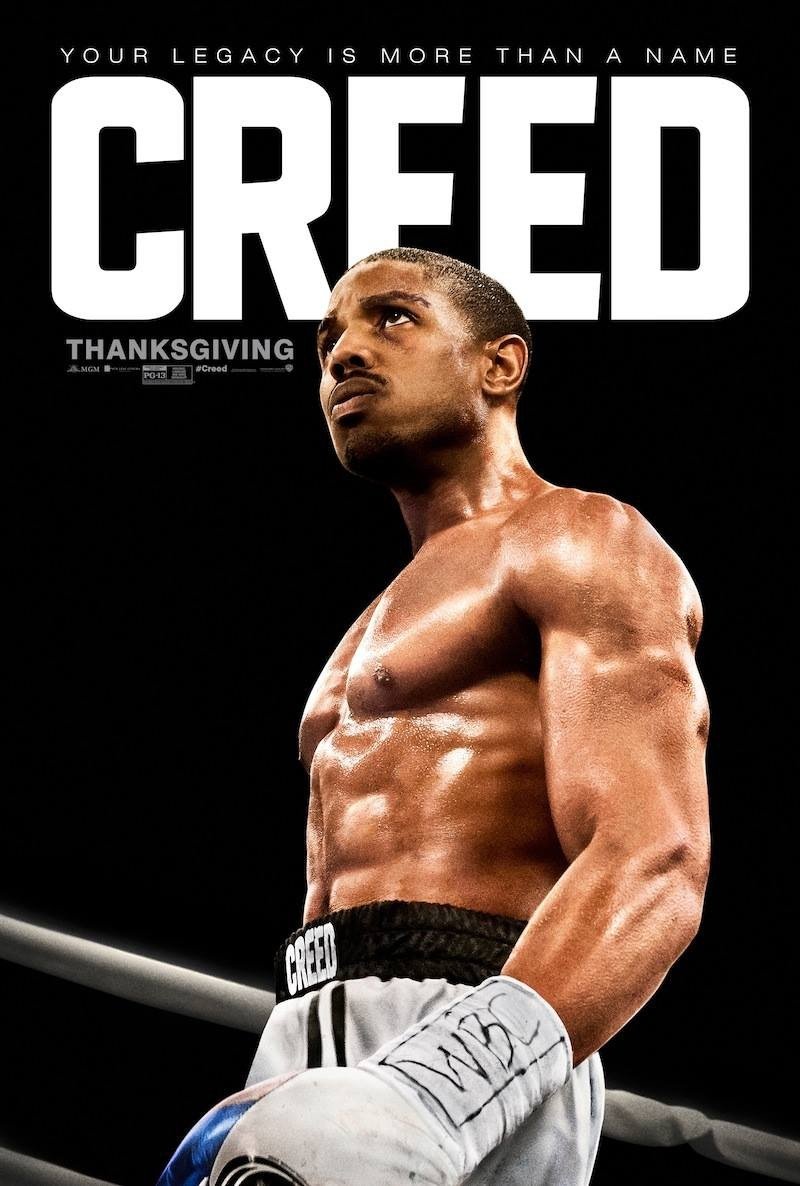
That was a bet, and so was nearly everything else about the movie that opened on Wednesday, November 25, 2015, the day before Thanksgiving. It was the seventh film in the Rocky series and the first spinoff, directed by a 29-year-old with exactly one feature behind him, built around a hero who had never appeared in a Rocky movie, and released by a studio system that had mostly treated the franchise as finished. It grossed roughly $174 million worldwide, returned its oldest star to the awards stage and cemented the partnership of a director and an actor who would go on to make some of the decade’s biggest films together. Eleven years later, on the day it turns eleven, it is worth asking how a sequel nobody had requested became the version of Rocky that people actually quote.
A Pitch Made Before the Director Had a Career
Coogler did not set out to rescue a franchise. He set out to talk to his father. Growing up in the East Bay, he had watched the Rocky films with Ira Coogler, who knew Rocky II so well that he could recite the late-night church scene between Rocky and his trainer from memory. When Ira fell seriously ill around the time Coogler was preparing Fruitvale Station, the director found himself thinking about the series again, and about what it would mean to put a version of himself inside it. In an oral history published by The Ringer last year, Coogler summed up how remote the idea seemed: he rated his chances of getting it made as roughly those of becoming an astronaut.
The path ran through an agency. Coogler’s representatives at WME happened to share an office with Stallone’s, and he pitched the story while still in prep on his first film. Michael B. Jordan, his Fruitvale star, said yes to the idea before a single frame of that picture had been shot. Stallone was a harder sell. He had closed Rocky’s story in 2006 with Rocky Balboa and felt he had said what he had to say, and by his own account he resisted for about two years. He came around after seeing Fruitvale Station, meeting Jordan and hearing the personal reason behind the project. The AFI notes that his wife encouraged him, and that his agent’s teasing, that for a man who played Rocky he was acting rather cautious, did not hurt.
The script went through one important change on the way. In Coogler’s first version, Rocky was diagnosed with ALS, a sentence the character could not appeal. Stallone objected to a fate that sealed, and the team moved to non-Hodgkin lymphoma instead, which is treatable. It turned out Coogler’s father did not have ALS at all, and Ira is still alive. The revision improved the film, because Rocky now has a choice, and the whole second half turns on whether he will make it. It also meant that, for the first time, Stallone was playing Balboa in a story he had not written, a distinction that he has said made the performance easier.

Rocky Balboa, Seen From the Other Corner
The cleverest decision in the film is where it stands. The Rocky movies belong to the underdog from the neighborhood, and for four decades Apollo Creed was the glossy obstacle in his way. Coogler had always read him differently. He saw a man whose pride, loyalty and eventual friendship with Rocky made him the series’ most interesting figure, and he built the new film around the son Apollo never met. Adonis is not a hungry kid with nothing. He has money, a mother, a desk job and a name he refuses to use, and the mystery driving him is why a person with every reason to stay out of the ring cannot stop walking toward it.
That inversion let the film carry the old story without reciting it. Coogler has described Creed as an amalgam of the earlier films, a weird baby of Rocky, Rocky II and Rocky V, with the third and fourth chapters, the ones about Apollo, folded in as well. His editor, Michael Shawver, has pointed to a quieter organizing idea: time is running out for everyone on screen. Adonis is starting late for a fighter, Rocky is sick, his opponent is headed to prison and Bianca is losing her hearing. None of it is stated aloud, and all of it presses on every scene.
Stallone’s contribution was less about plot than about speech. He read the scenes in longhand, broke them down and told the younger writers what Rocky would never say. A line calling Apollo family was swapped for something looser and more street-corner. A cold bucket of water as a wake-up call was dismissed as cliche, and Rocky instead rouses Adonis by playing old records. Small corrections like that are why the character feels continuous with the one who first climbed the museum steps, a history we trace in our anniversary piece on Rocky at 50.
Learning to Be Hit
Jordan had never reshaped his body for a role before, and he did most of the work in private. In the two years between Fruitvale Station and Creed he secretly learned to box. Coogler took him to Oakland to spar with Andre Ward, the retired undefeated champion who would eventually play Danny Wheeler in the film, and Ward told him to throw punches for real. Jordan has said the first minute or so left him staring at the ceiling. The point stuck. From then on he sparred only with actual fighters, and the film’s casting followed the same logic.
Tony Bellew, a Liverpool cruiserweight who would play the champion “Pretty” Ricky Conlan, made his participation conditional on his own career: he told Coogler he would only do the movie if he won an upcoming rematch. He won. Gabriel Rosado, a working professional, played Leo Sporino, Adonis’s first opponent. Graham McTavish, cast as a trainer, learned the hard way that holding pads for a champion is a different skill from hitting them. Stallone also passed along a system for the shoot itself: film the fights first, while the cast was freshest, and get them out of the way.
That discipline shows. The boxing in Creed has weight and fatigue in it, and the performers look like people who understand where a punch comes from. It is easy to forget how unusual that is in a studio sports film, where the usual shortcut is a blur of cuts and a swelling cue.
The Shot That Wouldn’t Cut
The Sporino fight is the film’s thesis statement, and it was a stubborn piece of filmmaking. Coogler wanted the entire bout in one continuous take. His editor, who would normally want coverage as insurance, asked about a second camera for reaction shots and was told no. The crew rehearsed the choreography until it was automatic, and cinematographer Maryse Alberti, who drew on the grit of A Prophet and The Wrestler but kept the look more polished for a larger budget, shot roughly a dozen takes by her recollection. Producer Nicolas Stern called the Sporino fight the most classic version of the film’s long takes.
What makes it work is not the difficulty but the point of view. A conventional boxing sequence tells you how to feel from moment to moment. This one makes you share a single body’s exhaustion, in real time, with no cuts to tell you it is over. Tessa Thompson has recalled that her heart was racing on set, because she knew how hard Jordan had trained to get through it in one pass. In a way, the film was asking its lead to prove he belonged in the ring at the same moment his character did.
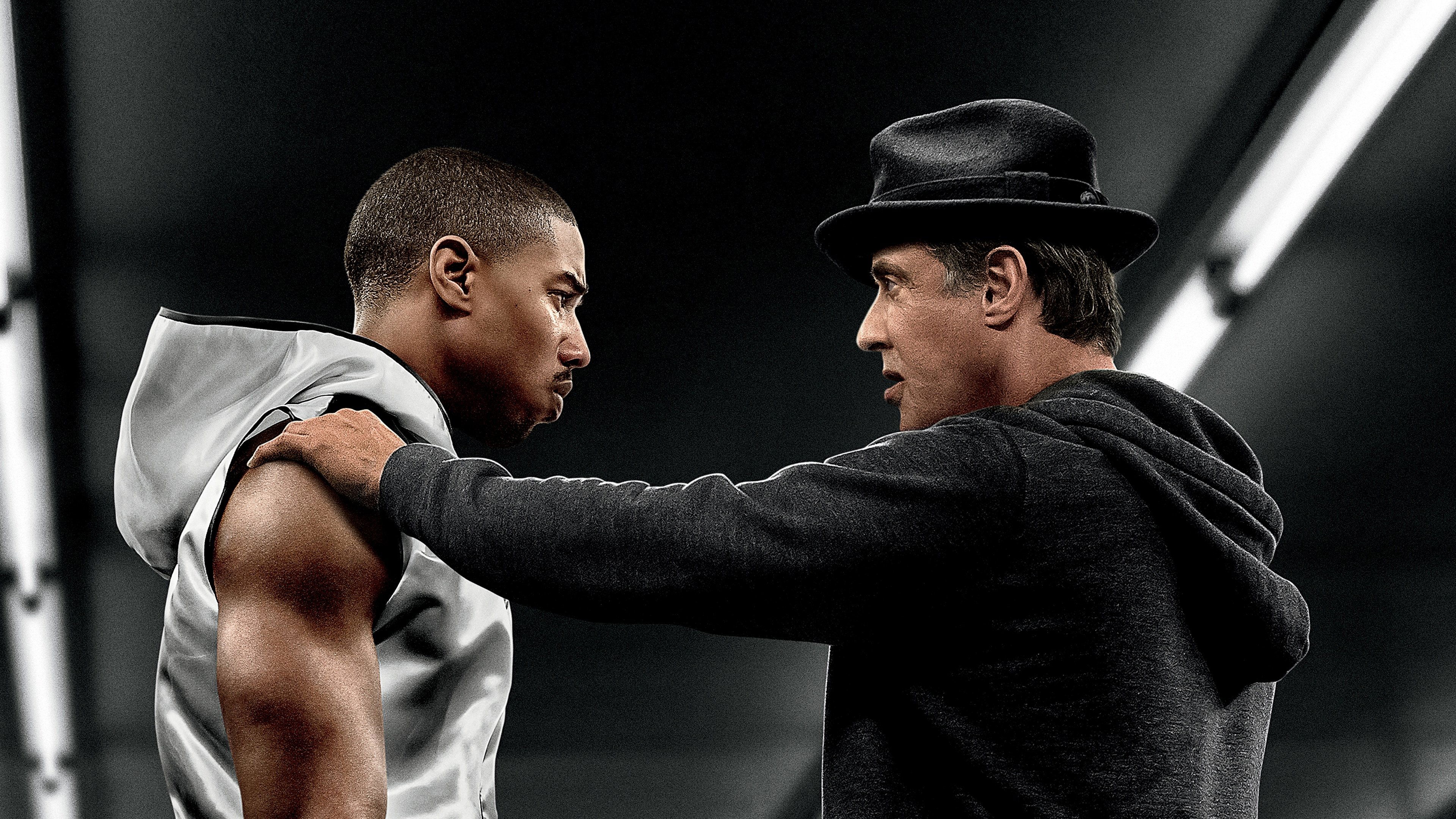
The finale, against Conlan, is the opposite kind of triumph: a cut-together spectacle staged on a Philadelphia soundstage but set at Goodison Park in Liverpool, with real crowd footage grabbed at an Everton match. It contains the film’s most dangerous moment. For the knockdown, Coogler wanted extreme slow motion, shot on a Phantom camera, a format that is merciless about fake punches. Watching the footage, Stallone decided Jordan had to take a real one, and since a director cannot easily say that to a lead actor, Stallone said it himself. Bellew, who did not want to hit his friend, threw a carefully managed arm punch, and when Jordan jumped into the timing it clipped him on the chin. Jordan went down, got up and gave the film its dream sequence. Shawver’s cut then places a brief flash of Apollo smiling at Rocky, taken from the first movie, inside Adonis’s head. It is the most efficient use of franchise memory in the series.
A Philadelphia That Looks Back
Rocky made Philadelphia a character, and Creed took the responsibility seriously. Location scouts looked at dozens of houses before settling on Rocky’s, and the production leaned on real neighborhoods and real people. The film’s best-loved sequence, Adonis running through the streets alongside a crowd of dirt bikes and ATVs, is a reworking of the original’s kids-on-the-run scene for a different generation. The riders were not stunt performers. They were local, and the production got them because Coogler had seen the culture around the city and wanted it in the film. Meek Mill was the first name on the composer’s list for the montage, and producer Nicolas Stern later noted that no studio would sign off on that kind of casting today.
The film’s intimate scenes are as carefully built as its fights. Bianca, played by Thompson, is a singer losing her hearing, a detail that grew out of conversations between the actor and Coogler, whose wife Zinzi worked as a sign-language interpreter. Thompson has said the scene in her apartment, where Adonis improvises music, was itself improvised and shot as one continuous 25-minute take. In another tender scene, Adonis helps take down her braids while they talk about whether to carry his father’s name. Coogler has explained that in a PG-13 film he wanted to imply intimacy and show culture at once, and the detail landed with audiences who recognized the ritual. It did the work a training montage cannot: it made the stakes about a person rather than a title belt.
Behind all of it was Ludwig Göransson, Coogler’s old classmate, who wrote a score that quotes the old themes only when they are earned. He also wrote original songs with Thompson for Bianca, and brought in Jhené Aiko for the montage and Donald Glover, as Childish Gambino, for the end credits. When Bill Conti’s familiar trumpets finally arrive during the last round, the theatre reaction is not nostalgia so much as release.
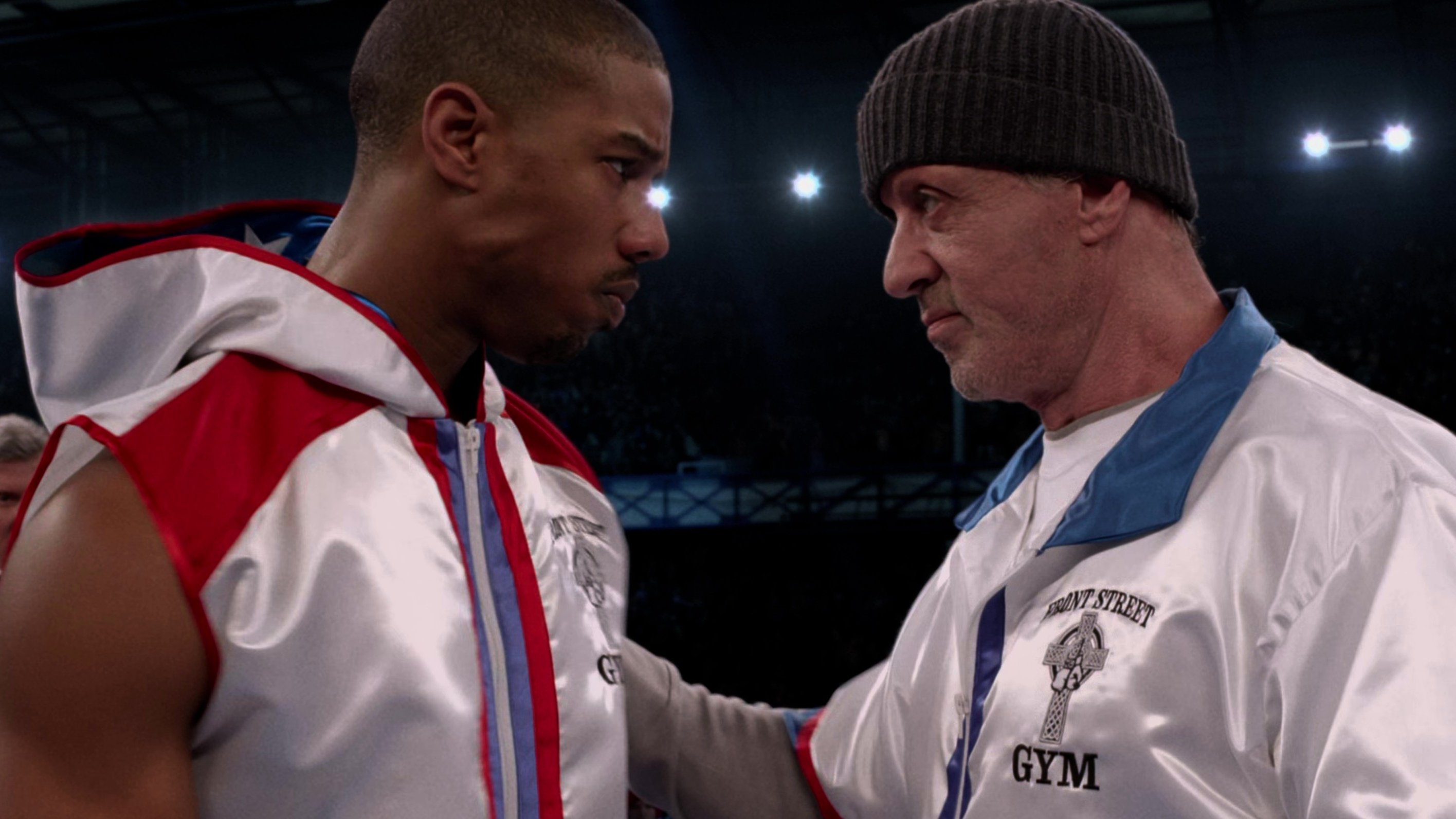
The Weekend It Opened
Thanksgiving week in 2015 was crowded. The Hunger Games: Mockingjay, Part 2 was in its second weekend, Pixar’s The Good Dinosaur was opening wide, and Creed arrived in 3,404 theaters on the Wednesday before the holiday. Mockingjay won, as expected, but Creed’s result was the surprise of the frame.
| Film | Three-day weekend | Five-day holiday |
|---|---|---|
| The Hunger Games: Mockingjay, Part 2 | $51.6 million | About $76.0 million |
| The Good Dinosaur | $39.2 million | About $55.5 million |
| Creed | $30.1 million | About $42.1 million |
Figures come from Box Office Mojo and contemporaneous weekend reports, and Mockingjay, Part 2 was in its second weekend while the other two opened. Creed’s debut was the biggest for any Rocky film, and the run was only beginning, since it held well and finished near $174 million worldwide against a budget in the mid-$30 millions. The echo with this week is hard to miss. Lionsgate’s Sunrise on the Reaping took $56 million on its opening Friday and is tracking for Lionsgate’s first $100 million launch since 2015, which is to say since the very Mockingjay that Creed opened against. The holiday frame has always rewarded the confident counterprogrammer, and in 2015 that was a boxing picture with an unknown director.
The Oscar Season That Said More Than Anyone Meant It To
Awards season is where the story gets complicated. Stallone won the Golden Globe in January 2016, his first, and the Critics’ Choice award, and he entered the Oscars as the favorite for Best Supporting Actor. When nominations were announced, he was the only person from the film on the list. Coogler and Jordan were not there, and the omission landed in the middle of the first #OscarsSoWhite conversation. Stallone even considered staying home in solidarity before Coogler talked him out of it. On the night, Mark Rylance won for Bridge of Spies, one of the more celebrated upsets of the decade.
It is tempting to treat that night as a footnote, but the sequel to it has been unusually satisfying. Coogler went on to direct Black Panther, then Sinners, with Jordan as his lead. Sinners arrived at this year’s ceremony with a record 16 nominations. On March 15, 2026, Jordan won Best Actor for playing twin brothers Smoke and Stack, becoming the sixth Black man to take that award, and thanked Coogler from the stage. Coogler won Best Original Screenplay, and Göransson collected his third Oscar for score. The people left out in 2016 closed the loop a decade later.
The industry lesson is still unfinished. Mahershala Ali said this week that two Oscars do not guarantee him roles, a reminder that recognition and opportunity are not the same thing. Creed is a useful case study in what happens when somebody builds the opportunity first and waits for the recognition to catch up.
What a Legacy Sequel Owes the Original
Creed arrived at the start of an era in which studios discovered that the best way to revive an old property was to treat it with affection and then hand it to somebody new. It also belongs to a particular family of comebacks. Four years earlier, the Muppets had returned on the same Wednesday before Thanksgiving by making the audience’s indifference the plot, a trick we examined in Today in Cinema: The Muppets at 15. Creed took the opposite route. It treated the audience’s love as the plot, and asked what a new generation owed the old one.
The franchise has kept moving. Creed II followed in 2018 and Creed III in 2023, with Jordan making his directing debut and Stallone stepping aside. The series has now become a test of the question our analysis of James Bond and John Wick poses about franchises that outlive their original heroes: what does a universe look like when its founder has left the building? In Creed’s case, the answer is a growing list of spinoffs rather than a single hero.
Update (Nov 25, 2026, 9:30 AM GMT): Michael B. Jordan said in February that a fourth Creed film is definitely coming, and has described a Prime Video series, Delphi, that is reported to center on Adonis’s daughter, Amara. A Drago spinoff has also been reported. Dolph Lundgren said in October he believes MGM is focused on Creed 4 and that he has likely played Drago for the last time.
There is also a more personal postscript. Carl Weathers, who played Apollo Creed and whose character gave the film its name, died in 2024. Jordan has said that he met Weathers for the first time at the premiere of the original film, and that Weathers had loved what he saw. It is the kind of detail that a screenwriter would probably consider too neat.
The Refrain
The phrase that outlasted every plot point is the one Jordan has called the film’s theme.
“If I fight, you fight.”
It is a sentence about mentorship, but it also describes how the film got made. A director with a personal reason, an actor who trained in secret, a legend who gave up control, a cinematographer who kept the camera running and a cast that took the hits for real: each of them fought because someone else did. The result is not the loudest movie in the series or the one with the most famous fight, but it may be the one that best understood what the first Rocky was really about, which is that you do not need to win, and you do need someone in your corner.
Creed is available through rental, purchase and subscription services, so check current listings for your region. If you are comparing where to stream it, our ranking of the best movie streaming platforms is a useful place to start.
- The Ringer: If I Fight, You Fight: The Oral History of Creed
- Box Office Mojo: Domestic 2015 Weekend 48, Thanksgiving 5-Day
- Digital Trends: Box office hits and misses, Creed goes the distance
- AFI: AFI Movie Club, Creed
- CBS News: Creed director Ryan Coogler, new Rocky movie is love letter to dad
- JoBlo: It took Ryan Coogler two years to convince Sylvester Stallone to make Creed
- TheWrap: How Creed director Ryan Coogler brought Rocky back to life
- NPR: 2016 Oscar nominations are announced
- The Hollywood Reporter: Sylvester Stallone loses best supporting actor
- WEMU: Cinema Chat, Oscar preview
- Associated Press: Michael B. Jordan wins best actor for Sinners
- GamesRadar: Michael B. Jordan wins Best Actor, Sinners takes four Oscars
- The Ring Magazine: Michael B. Jordan says Creed IV is definitely on its way
- TV Insider: Delphi, Creed IV and more updates on Rocky spinoffs
- Screen Rant: Ivan Drago’s Creed return fate gets official update from Dolph Lundgren
- Wikipedia: Creed (film)
- Image credit: Warner Bros. Pictures, Metro-Goldwyn-Mayer and New Line Cinema, via TMDB
News
Latest on Every Movie Plug
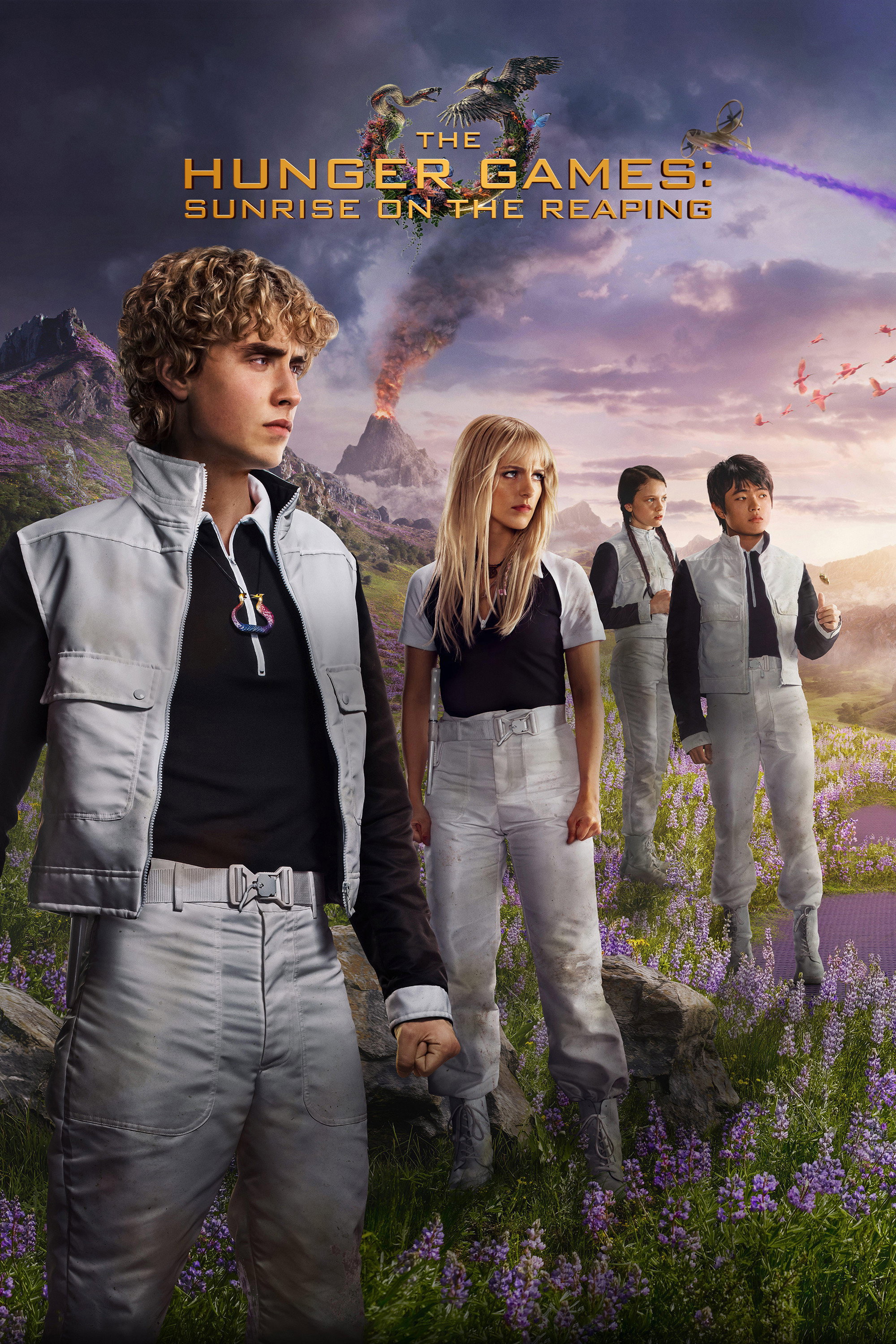 Box Office News Sunrise on the Reaping Box Office: $56M Friday, $120M Eyed The Hunger Games: Sunrise on the Reaping earned $56M on opening day and is tracking for about $120M, Lionsgate’s first $100M launch since 2015. Read the story →
 Entertainment Spielberg, Honored at MoMA, Says He Has Never Stood Alone on a Set Steven Spielberg was honored at MoMA’s 18th Film Benefit with Tom Cruise, Martin Scorsese and Bruce Springsteen, and spent his speech crediting everyone else. Read the story →
 Celebrity News Mahershala Ali: Two Oscars Don’t Guarantee Roles Mahershala Ali says two Oscars do not guarantee roles, because most greenlit projects have no part for him. Here is what he said and what comes next. Read the story →
Articles
Latest on Every Movie Plug
 Today In Cinema Today in Cinema, November 21: Rocky at 50 and Still Standing Rocky opened November 21, 1976. How a broke Stallone, a three-day script and a $1 million budget won Best Picture, and how its 50th anniversary is being marked. Read the article →
 Today In Cinema Today in Cinema, November 23: The Muppets at 15 The Muppets opened November 23, 2011. How a franchise nobody was asking for won an Oscar, split its own veterans and changed what a comeback looks like. Read the article →
 Industry Analysis James Bond vs John Wick: Which Franchise Is Stronger Now? James Bond and John Wick compared: box office, stars, ownership, spin-offs and tone, as Robert Pattinson takes over 007 and Caine heads for 2027. Read the article →